
SECTORS / CIVILIAN
▩ CIVILIAN ————
Autonomy where people cannot go.
Petra is cognitive AI for civilian robots – airborne, ground and fixed – giving them a brain that reasons about places they have never seen. It navigates without GPS, learns as conditions change and shares what it learns across the team, so a small crew can direct many machines and understand every decision they make.
▩ APPLICATIONS ————
Where the map runs out
Across civilian infrastructure, robots face the same problem: the environment is unknown, changing, or both, and there is no time to survey it, train on it or wait for a signal. Petra is built for that problem. Below, six areas where it applies, then three in more depth.
INDUSTRY
Industrial automation, manufacturing and warehousing
Mobile and dexterous robots inspect equipment and handle variable objects, revising their picture of what is happening as they go. Vehicles and warehouse robots navigate safely around moving people, blocked routes and misplaced objects.
ENERGY
Energy and critical infrastructure
Drones and ground robots inspect power lines, wind farms, pipelines and remote assets, then investigate an ambiguous finding before deciding what to report. They seek out the information they need, autonomously.
MARITIME
Maritime and offshore operations
Uncrewed vessels and inspection robots combine imperfect sensor inputs, investigate uncertain observations and adapt their route through currents, poor visibility and intermittent comms, while following the rules of navigation.
HEALTHCARE
Healthcare and assistive robots
Robots that support complex tasks around the home, helping people live independently for longer rather than moving into a care home or assisted living.
AGRICULTURE
Agriculture and environmental monitoring
Field robots and drones survey crops, locate anomalies and decide where a closer look is most useful, updating their world model from sparse observations as fields, seasons and weather change.
EMERGENCY
Fire and emergency services
Wide‑area monitoring for early detection of fires, autonomous delivery of suppressant to difficult or inaccessible terrain, and fast information‑gathering for first responders.
▩ SEARCH AND RESCUE ————
Find people faster, in terrain nobody has mapped.
Casualties are lost in places that are unmapped, changing or too dangerous to enter: collapsed structures, flooded valleys, dense forest, a mountainside after a storm. Petra turns a handful of drones into a coordinated search team.
Curious by design. Each unit moves towards the area it is least certain about, so the team covers unknown ground without a pre‑planned grid.
▩
A shared picture. What one drone observes, every drone knows. The search divides itself and narrows as evidence builds.
▩
Works when GPS does not. Under canopy, in gorges, inside buildings, after infrastructure fails.
▩
One coordinator. A single operator sets the objective and stays on the loop. Reserve assets are guided straight to the casualty.
▩
Every decision explained. Actions trace back to the observations and beliefs behind them – essential when lives and liability are at stake.
▩

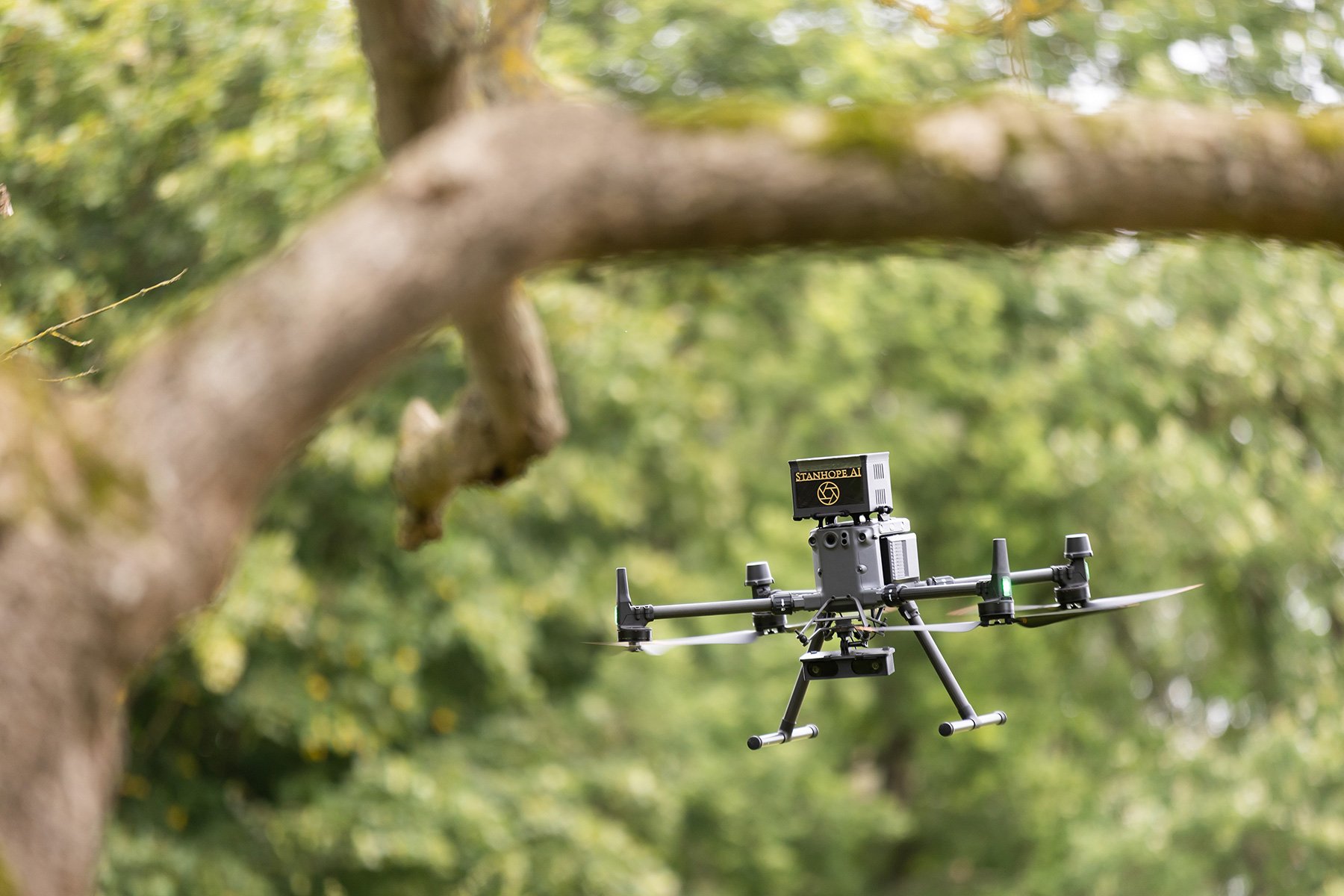
AUTONOMOUS FLIGHT OVER WOODLAND — STANHOPE AI FIELD TRIAL, OWN FOOTAGE▩ FIRE MANAGEMENT ————
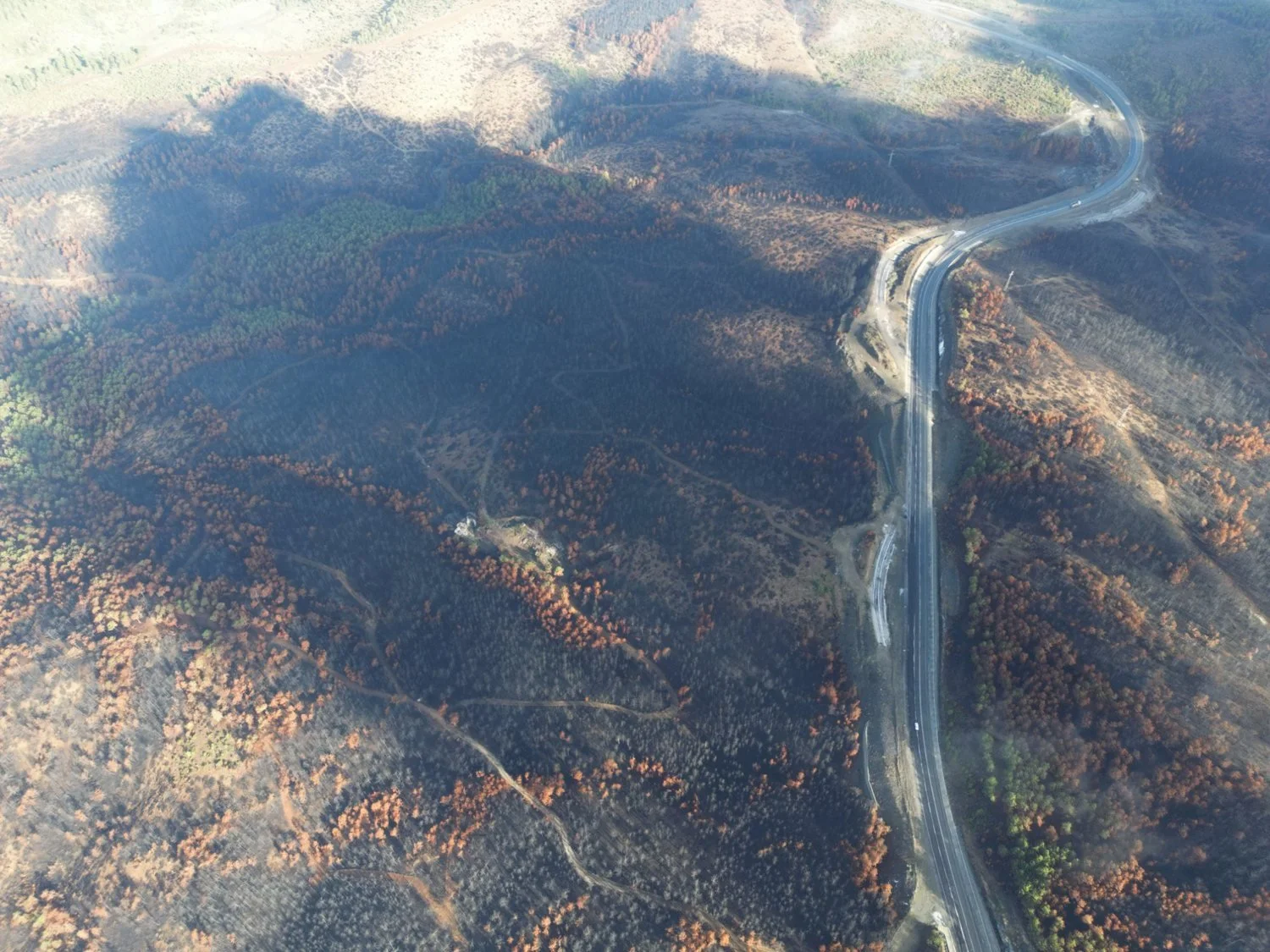
Hold a live picture of a moving fire.
A fire front moves faster than a map can be redrawn. Petra keeps a live model of the ground, updates it as conditions change and sends units to wherever the picture is least certain.
Live perimeter and hotspot tracking. Units follow the front continuously and feed an evolving picture to the incident commander.
▩
Minimal sensing. Petra reasons from sparse sensor data, so it is designed to keep working when smoke, heat and darkness degrade cameras.
▩
No connectivity dependency. Everything runs on the platform. Lose the link and the mission continues.
▩
Team behaviour. Units divide perimeter, spotting and relay roles between themselves and re‑plan as wind and crews shift.
▩
Crew safety first. Access and escape routes can be scouted before ground teams commit.
▩
▩ INDUSTRIAL ROBOTICS ————
Robots that adapt to the site, not the other way round.
Warehouses, process plants, mines, offshore platforms and construction sites change daily and rarely have GPS. Petra lets ground robots, indoor drones and inspection platforms work in them without a map, a training set or a rebuild every time the layout moves.
Map‑free indoor navigation. GNSS‑denied by default, in structures that change from shift to shift.
▩
No retraining. The mission model is specified, not learned. A new site or task is a reconfiguration, not a new dataset.
▩
Small footprint. Around 20 million parameters, running on the robot’s existing compute. No GPU rack, no cloud round trip.
▩
Fleet learning. One robot finds a blocked aisle; the fleet knows.
▩
Built for the safety case. Traceable decisions support certification, audit and incident review.
▩
Petra SDK. Slots alongside existing autopilots and robot controllers, with minimal sensor requirements.
▩
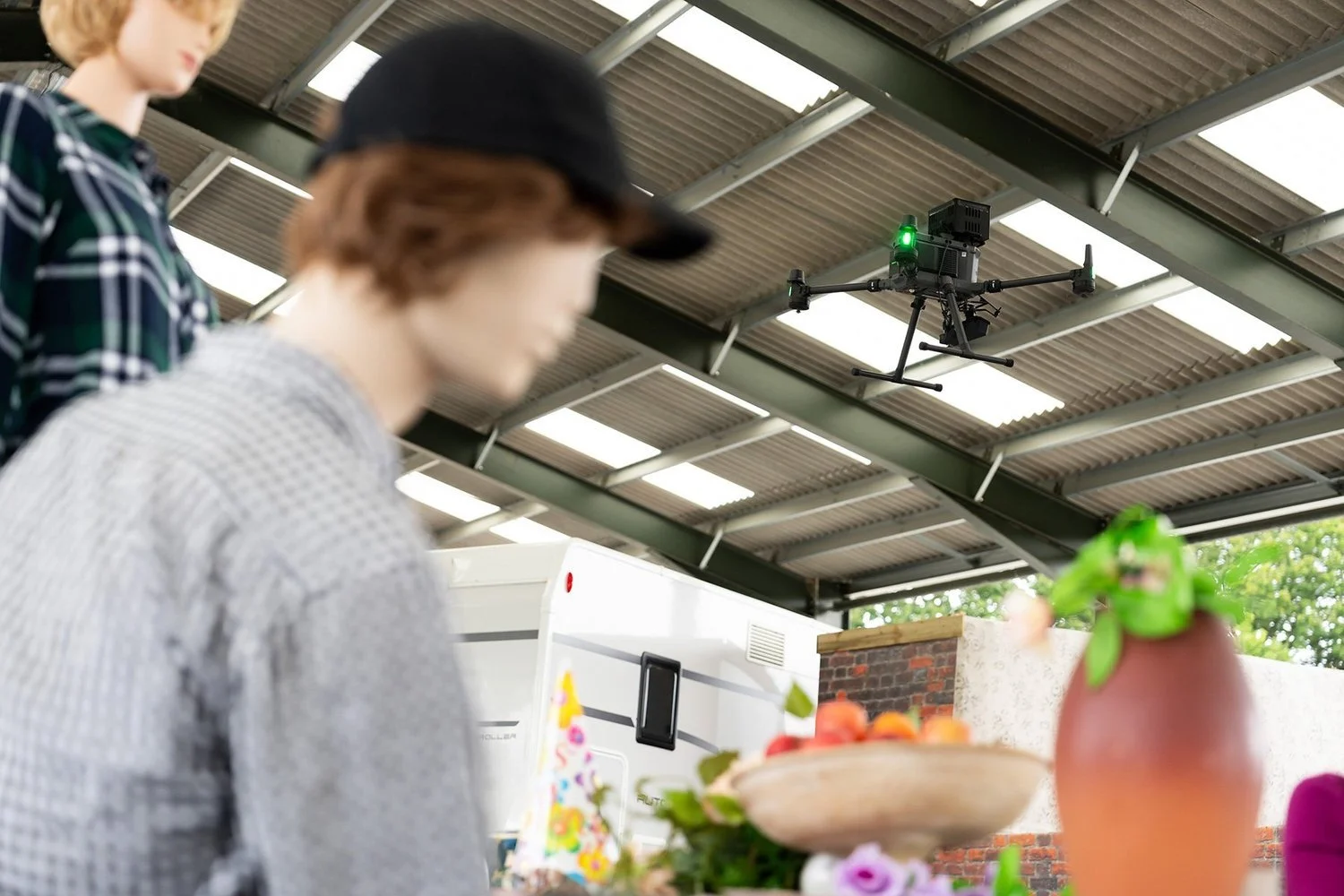
INDOOR FLIGHT, GNSS-DENIED — STANHOPE AI DEMONSTRATION, OWN FOOTAGE•
Where we are. Petra is proven at TRL 6 in defence field trials and delivered today through the Petra SDK. Civilian trial programmes open in 2027; we are selecting early partners in search and rescue, fire and industrial robotics now.
▩ REQUEST A DEMO ————
Put Petra on your platform.
Drone manufacturers, primes, defence programmes and civilian operators can see Petra working on their own platforms. Complete the form to arrange a demo.
Read our Privacy and Cookies Policy.